Home › Panels › PIR/PUF Wall
PIR & PUF Wall Panels
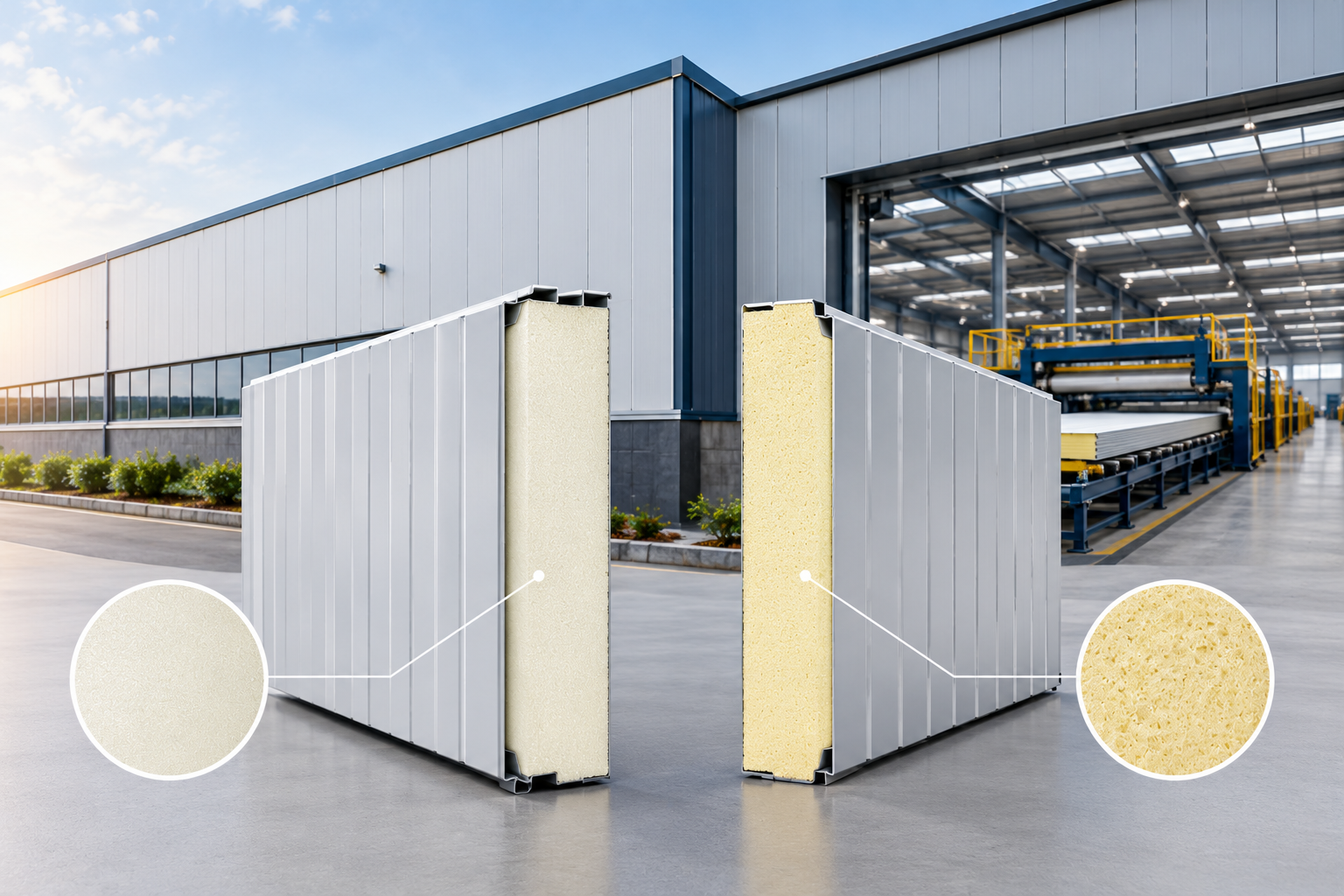
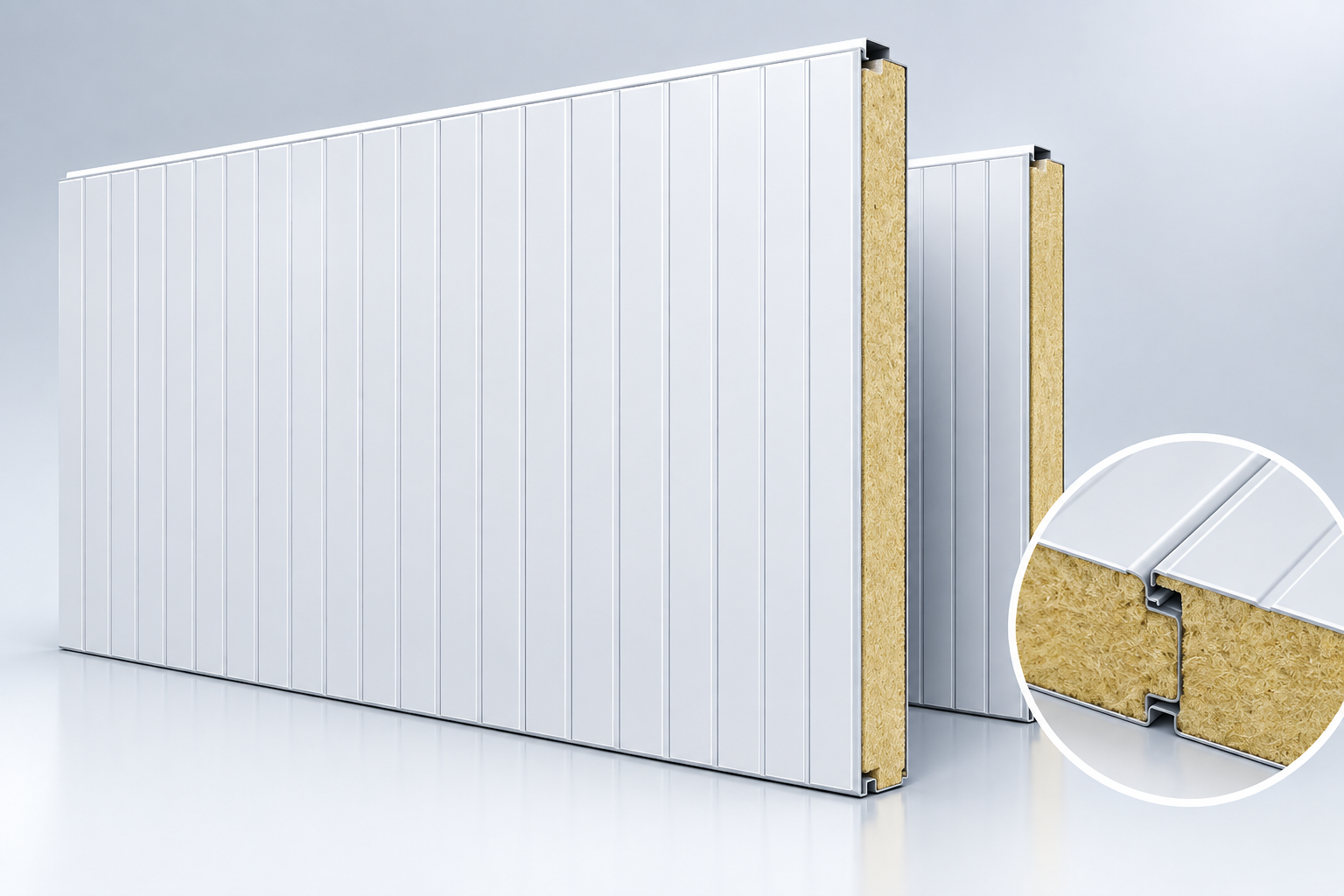
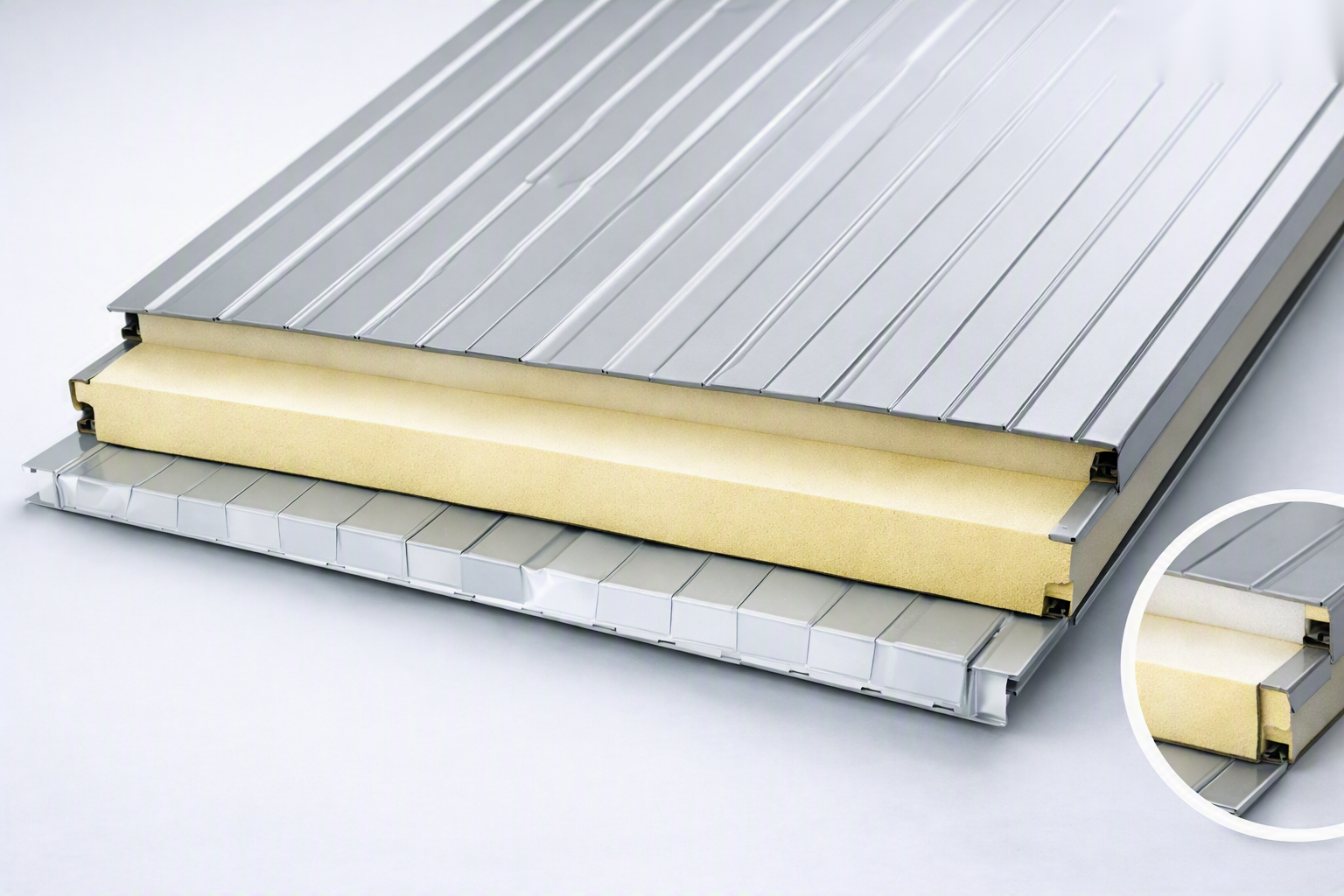
One insulated wall panel, two cores to choose from. We fit PIR by default for its thermal and fire edge, and PUF when the project calls for a lighter spend. Both are pressed on the same continuous line at our Derabassi facility, so every panel comes off with the same density, the same thermal value, and the same quality.
PIR by Default
We fit PIR as standard for its thermal and fire edge, with PUF ready when the project calls for it.
Thinner Wall, Same Value
PIR reaches the same insulation in a slimmer panel, reclaiming floor space and cutting steel.
Eurofins Fire Rated
Independently certified fire performance, with lower smoke than a standard foam panel.
Continuous Line Quality
Not batch produced. The same density and performance on every panel off the press.
PIR & PUF, One Choice to Make
PIR and PUF come off the same chemical family, which is why ACE makes them on the same continuous line and treats them as one decision, not two separate products. These days PIR is the core we fit by default, because it insulates better, holds a wider temperature range, and behaves far better in a fire. PUF has not gone anywhere though. For rooms holding above minus twenty degrees, and projects where fire is not the governing concern, PUF gives you excellent performance at a lower price, and we will happily specify it. The table shows where each one earns its place.
Panel Joinery
Available Joint Systems
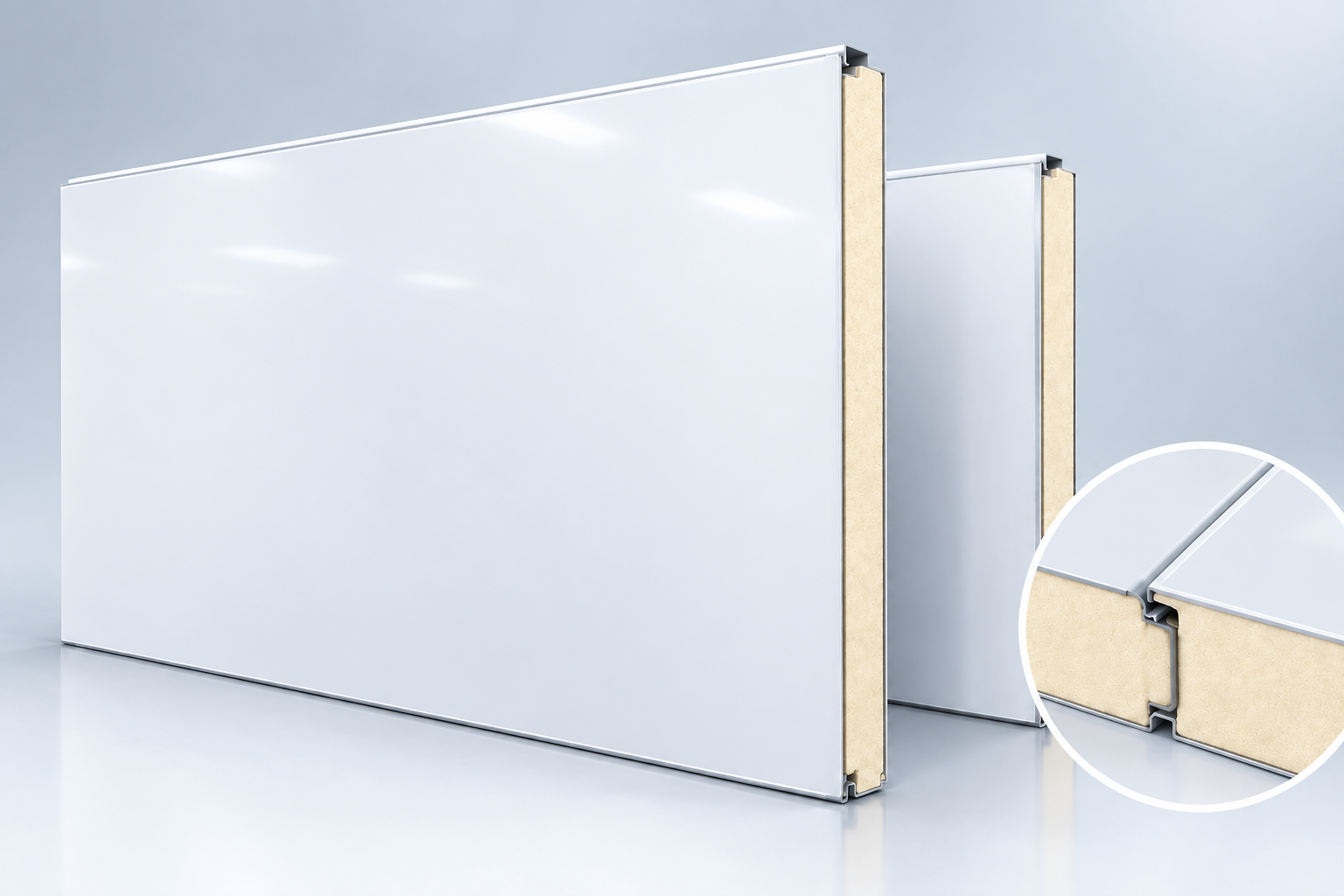
Roof Joint
Single Tongue And Groove
Double Tongue And Groove
Hidden Tongue And Groove
M - Section
Surface Materials
Facing Options

PPGI
Colour Coated Galvanised
0.30 to 0.80mm. SMP, RMP, PVDF coatings.
PPGL
Colour Coated Galvalume
Superior corrosion resistance. Coastal sites.

AL
Aluminium
0.40 to 0.71mm. Lightweight, non magnetic.

PPAL
Colour Coated Aluminium
Custom RAL colours. Clean room and architectural.

SS
Stainless Steel
SS304, SS316. GMP pharmaceutical. 0.50 to 1.20mm.
Interactive Tool
Configure Your Panel
Pick your application. We will show you the core we recommend, PIR or PUF, and the specification that goes with it.
Before You Order
Getting the Spec Right
A roof carries the most energy loss and the most weather, so the decisions made here matter most. The wrong core for the temperature, the wrong thickness for the span, the wrong detailing at the overlap. Run through these before you freeze your bill of quantities.
Decide These Before You Order
- Match the core to the job. PIR by default for deep freeze, pharma, and fire aware work. PUF where the room holds above minus twenty and budget leads.
- Size thickness to your real temperature, not a rule of thumb. Ask us to calculate the U value for your room.
- Choose the facing for the environment. Colour coated steel for standard industrial. Stainless steel where washdown or food contact applies.
- Pick the coating by exposure. SMP for durability inland, PVDF for coastal or chemically aggressive air.
- Confirm the fire class against your occupancy and your insurer. Ask what they need before you order, not after.
- Request the thermal test data and NABL certification with the quotation, not once the panels are on site.
Once It Is Installed
- Walk the joint lines and flashings after every monsoon. A tired sealant is the most common leak path.
- Clean the panels with mild detergent only. Abrasive cleaners cut the coating and shorten its life.
- Recheck fastener torque on exposed panels every couple of years.
Where It Goes
Applications
Cold Storage
Wall envelopes holding steady from a gentle chill down to deep freeze.
Clean Rooms
Smooth hygienic wall systems for GMP pharmaceutical and precision work.
Fire Compartments
Fire aware wall enclosures where smoke and spread have to be controlled.
Industrial Buildings
Insulated walls for factories, warehouses, and sheds across India.
Questions
Before You Specify
What buyers, architects, and contractors ask us most about these panels.
Should I choose PIR or PUF for my wall?
As a rule we fit PIR by default, because it insulates better and behaves far better in a fire. PUF is the right call for walls holding above minus twenty degrees where fire is not the governing concern and budget leads. Tell us the room and we will recommend honestly.
Are PIR and PUF really the same panel?
What thickness do I need for cold storage?
Can these panels be used in pharmaceutical clean rooms?
What certifications do ACE panels carry?
Keep Exploring
Related Panels & Systems
Talk to Our Team
Tell Us About Your Walls.
Share your room temperature, fire requirement, and wall area, and our team will recommend PIR or PUF honestly, with a thickness, a price, and a timeline within five working days.
- Factory: Derabassi, Mohali, Punjab
- Office: #669, Sector 11-B, Chandigarh
- Phone: +91 98883 00888
- Email: info@aceprefab.com