
Fire Performance · PIR & PUF
Fire Rated Insulation Panels
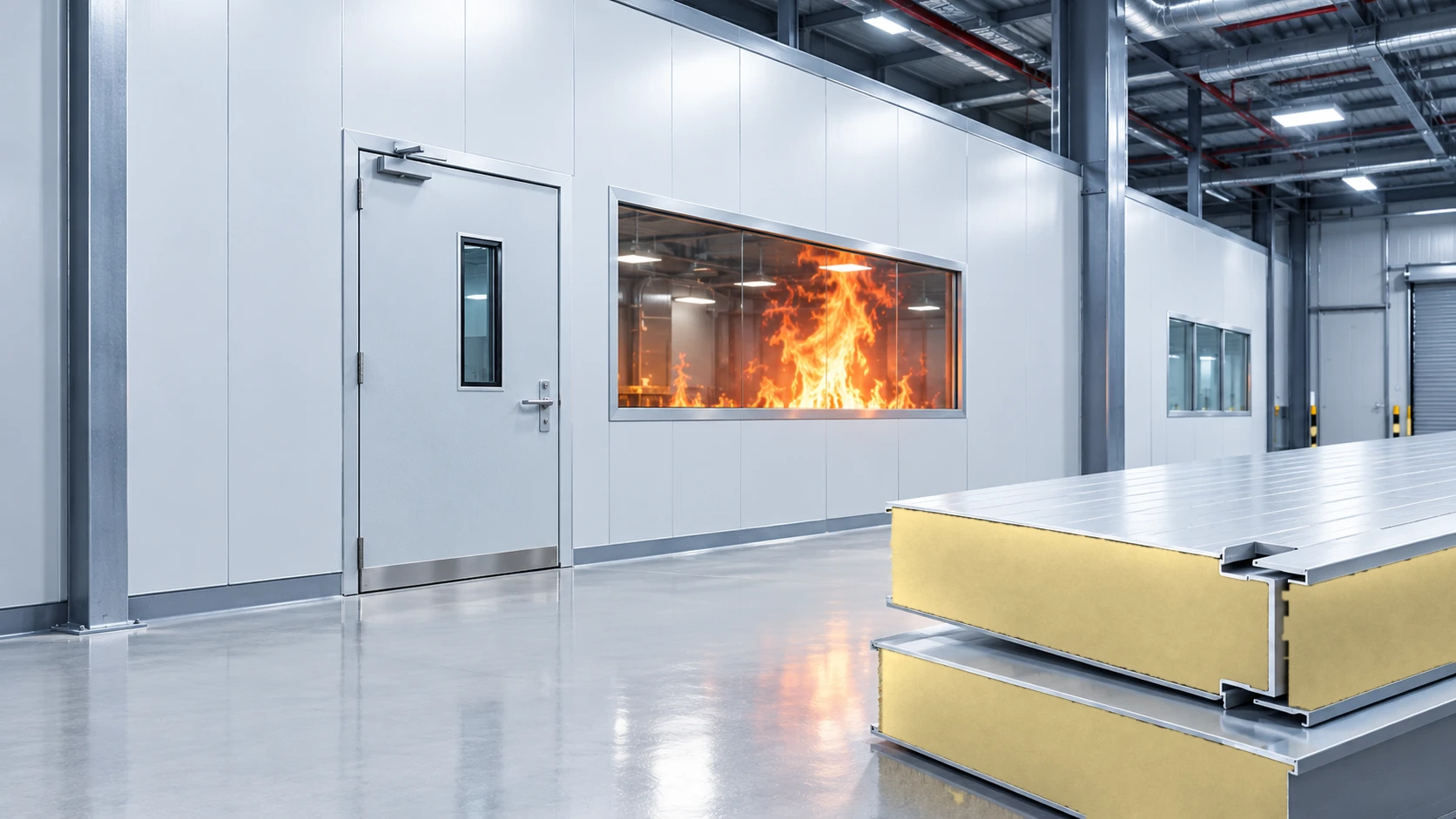
Fire insulation is not one specification. Standard PUF meets the basic fire code for most buildings. PIR forms a protective char when it meets flame, so it resists flame spread far better than PUF, and our 100mm PIR panels have their fire performance independently tested by Eurofins. Knowing which your project needs, and why, is what separates a correct specification from an expensive mistake.
100mm
PIR · Eurofins Tested
Char
Forming PIR Core
2
Cores: PIR & PUF
Which Panel Fits
Choosing the Right Panel for Fire Insulation
PIR 100mm
Highest Fire Performance
Our fire-tested build-up: 100mm PIR between coated steel skins, with fire performance independently tested by Eurofins. The specification for higher-risk zones and insurer-led projects.
Core
PIR, 100mm
Behaviour
Chars, resists spread
Testing
Eurofins tested
PIR
Enhanced Fire Performance
Char-forming foam core that resists flame spread far better than standard PUF. The practical upgrade for most fire-conscious projects.
Core
PIR
Behaviour
Chars, resists spread
Testing
Data on request
PUF
Standard Fire Code
Meets basic fire code compliance for buildings without elevated fire risk or enhanced insurance requirements.
Core
PUF
Behaviour
Standard foam
Testing
Basic compliance
The Practical Guide
Fire Rating Is a Spectrum, Not a Switch
Buyers often ask for ‘the fire rated panel’ as if there is one answer. There are levels, from standard PUF to PIR and our Eurofins-tested 100mm PIR build-up, each right for a different risk. Understanding which one your project actually requires, rather than defaulting to the most expensive option or the cheapest, is where our engineering team adds the most value in the specification conversation.
01
Standard PUF
Meets basic fire code for most buildings. Adequate where fire is a background consideration, not a primary risk.
02
PIR: Enhanced Performance
Char-forming core that resists flame spread far better than PUF, with fire performance tested by Eurofins on 100mm panels. The professional upgrade for most fire-conscious projects.
03
Detailing Matters Too
How a wall behaves in a fire also depends on its joints, fixings, flashings and penetrations. We detail all of them so the installed envelope performs the way it was specified.
04
Ask Your Insurer First
Before specifying, confirm what your insurance policy actually requires. Overspecifying wastes budget, underspecifying risks coverage.
Where It Applies
Common Use Cases
Large Cold Stores
High-value stock under one roof, where a better-behaving core than PUF protects goods and insurance cover.
Chemical & Paint Storage
Industrial zones near flammable materials, where PIR is specified alongside the site fire strategy.
Data Centres
Server halls where better fire behaviour and stable temperatures protect irreplaceable equipment.
High-Occupancy Buildings
Buildings with strict fire code requirements due to occupant density or evacuation complexity.
Questions
About Fire Insulation
What is the actual difference between PIR fire performance and PUF?
PIR foam forms a protective char when exposed to flame, which slows heat reaching the rest of the core and resists flame spread far better than PUF, which softens and melts sooner. Both are foam cores and both are classed as combustible, so the panel is one part of the building’s fire strategy, alongside detailing, compartmentation and detection.
What if my specification calls for non-combustible construction?
PIR is fire resistant but, like every foam core, it is not classed as non-combustible. If your building code, insurer or occupancy classification specifically mandates non-combustible construction, share that clause with our engineering team early and we will review the specification with you before anything is quoted.
What fire testing does ACE hold?
Our 100mm PIR panels have their fire performance independently tested by Eurofins, our thermal values are NABL-tested, and our manufacturing is ISO 9001:2015 certified. These are third-party results, not self-declared. Certificates are available on request for any tender submission or compliance documentation.
Does fire rated panel cost significantly more?
PIR typically costs 10 to 15 percent more than equivalent PUF. Insurers often weigh fire behaviour when setting premiums, which can offset that difference over the life of the building. We price both so you can compare like for like.
Talk to Our Team
Tell Us About Your Project.
Share your requirements and we will come back with a panel specification and indicative pricing within five working days.
- Factory: Derabassi, Mohali, Punjab
- Office: #669, Sector 11-B, Chandigarh
- Phone: +91 98883 00888
- Email: info@aceprefab.com